Designer : Ar. Swapnil Joshi & Ar. Yakin Kinger
Visual Art Design : Samruddha Mogal Visual Arts Consultancy
In Hira Wadi, Panchavati, Nashik, a home brings together two seemingly contrasting sensibilities—the richness of cultural heritage and the restraint of contemporary minimalism. Designed by architects Swapnil Joshi and Yakin Kinger, the interiors reflect the owner’s deep interest in history, research, architecture, cultural heritage and classical music. Visual art, conceived by Samruddha Mogal Visual Arts Consultancy, becomes an integral part of this dialogue between the past and the present.
The interiors are crafted with a restrained palette and natural materials such as wood, stone and fabric. Against this quiet material language, the artworks introduce moments of colour, history and visual narrative. The intention is not merely to decorate the spaces, but to bring elements of Nashik’s architectural and cultural landscape into the intimate setting of the home.
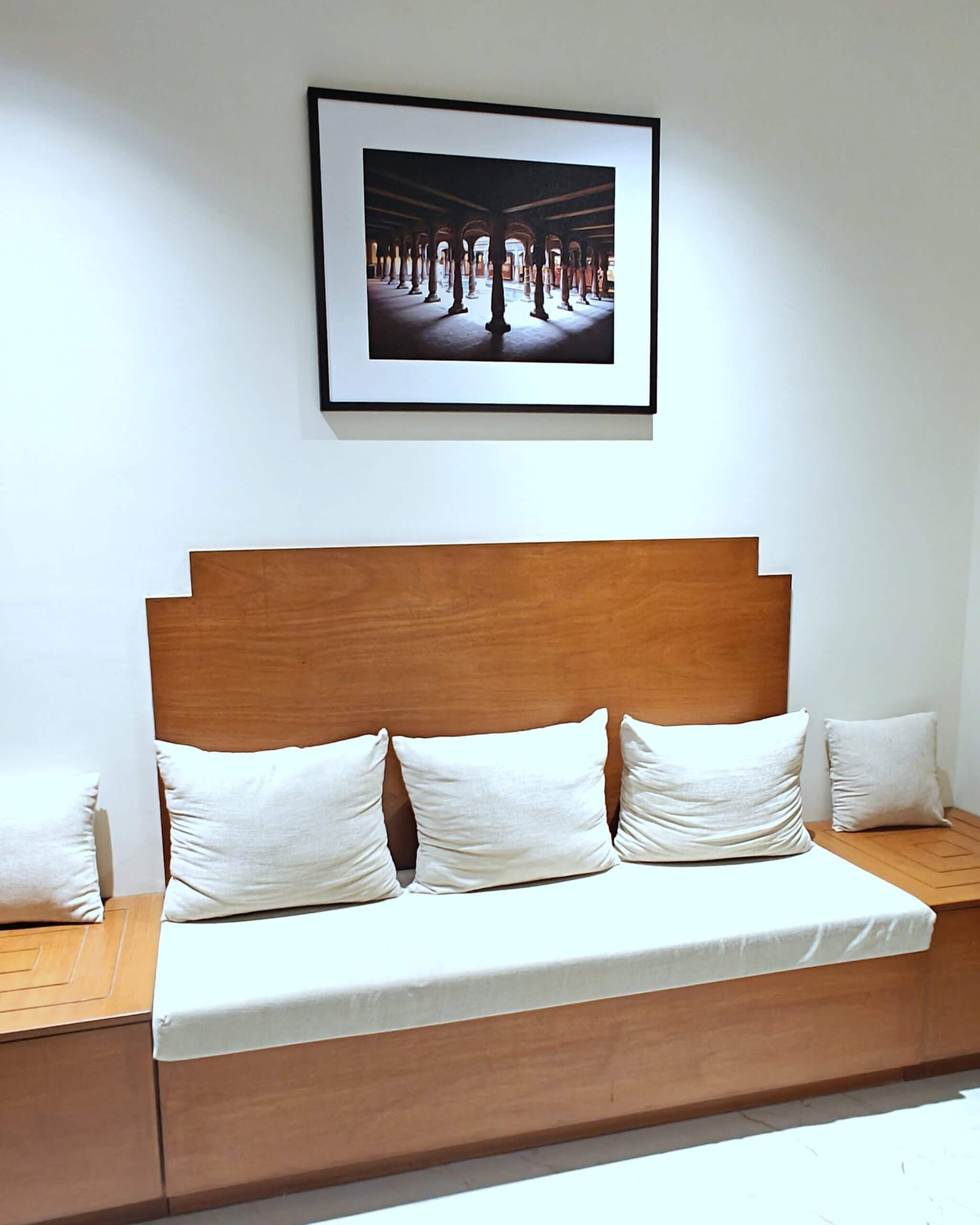
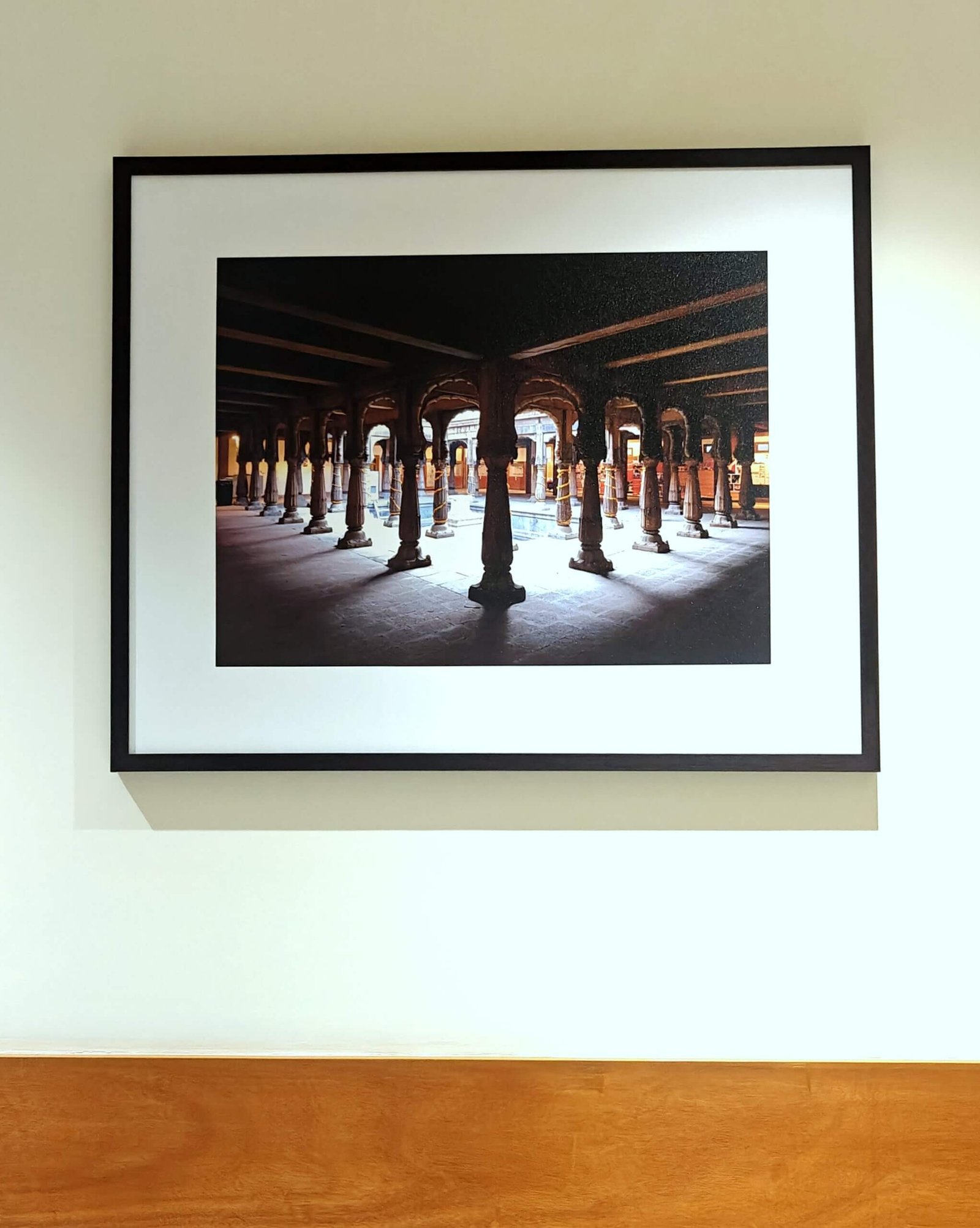
In the living room, a vibrant courtyard composition of Sarkar Wada, one of old Nashik’s well-known heritage structures, occupies a prominent place on the wall. The canvas captures the interplay of natural light filtering through the ornamental wooden columns of the courtyard. Its architectural details and changing light echo the materiality of the interiors, making the artwork feel naturally at home within the space. At the same time, it offers a glimpse into the architectural heritage of the city, bringing a fragment of old Nashik into a contemporary domestic setting.
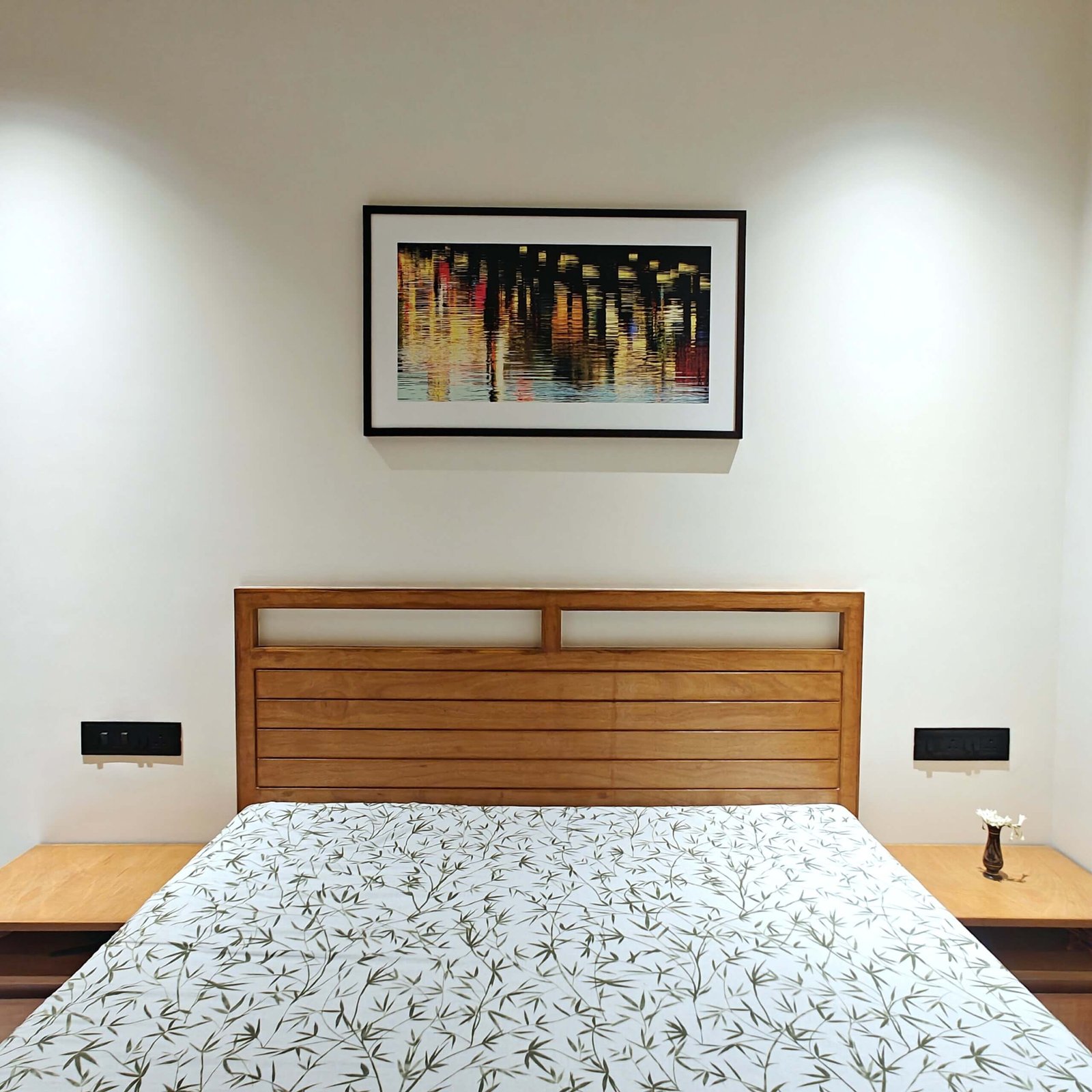
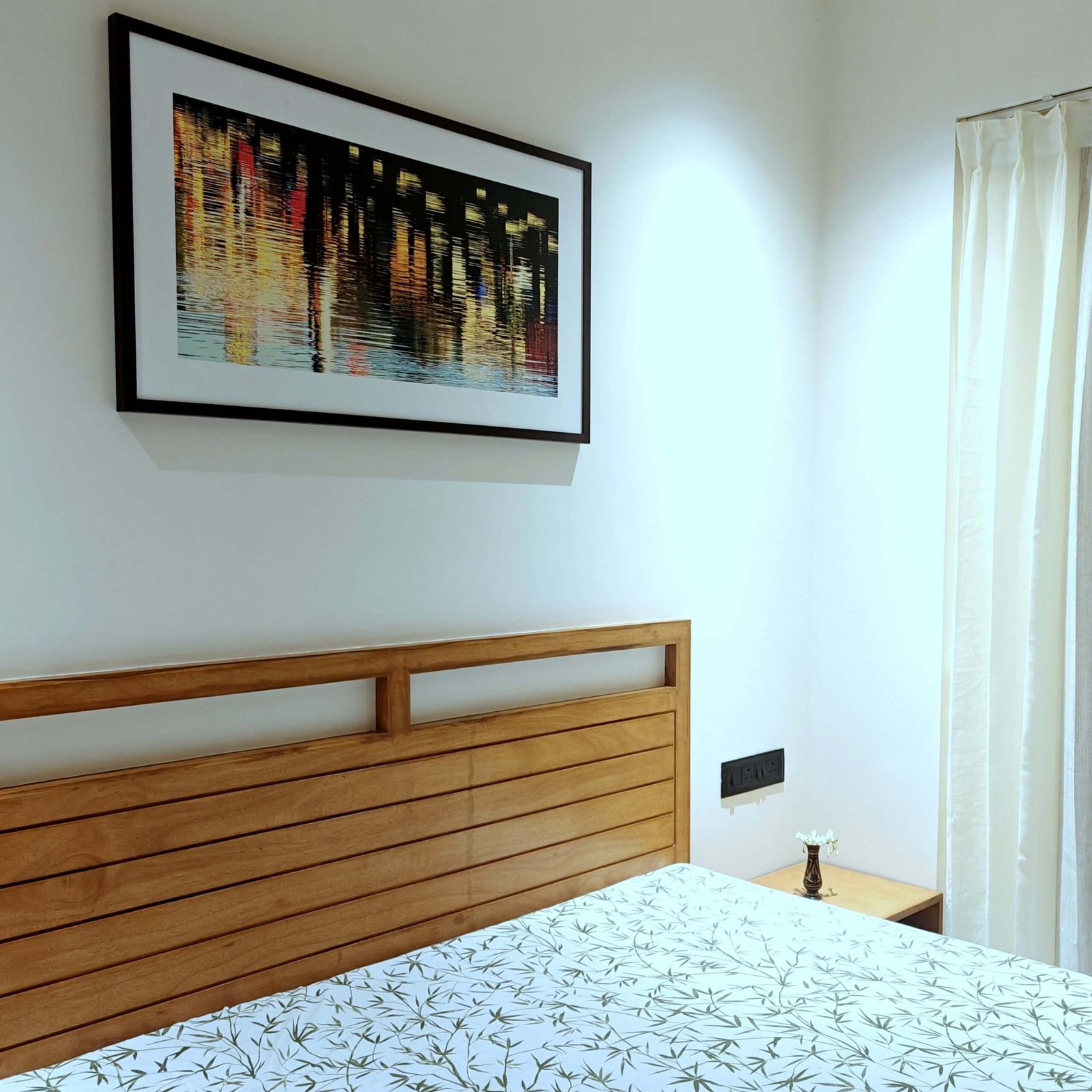
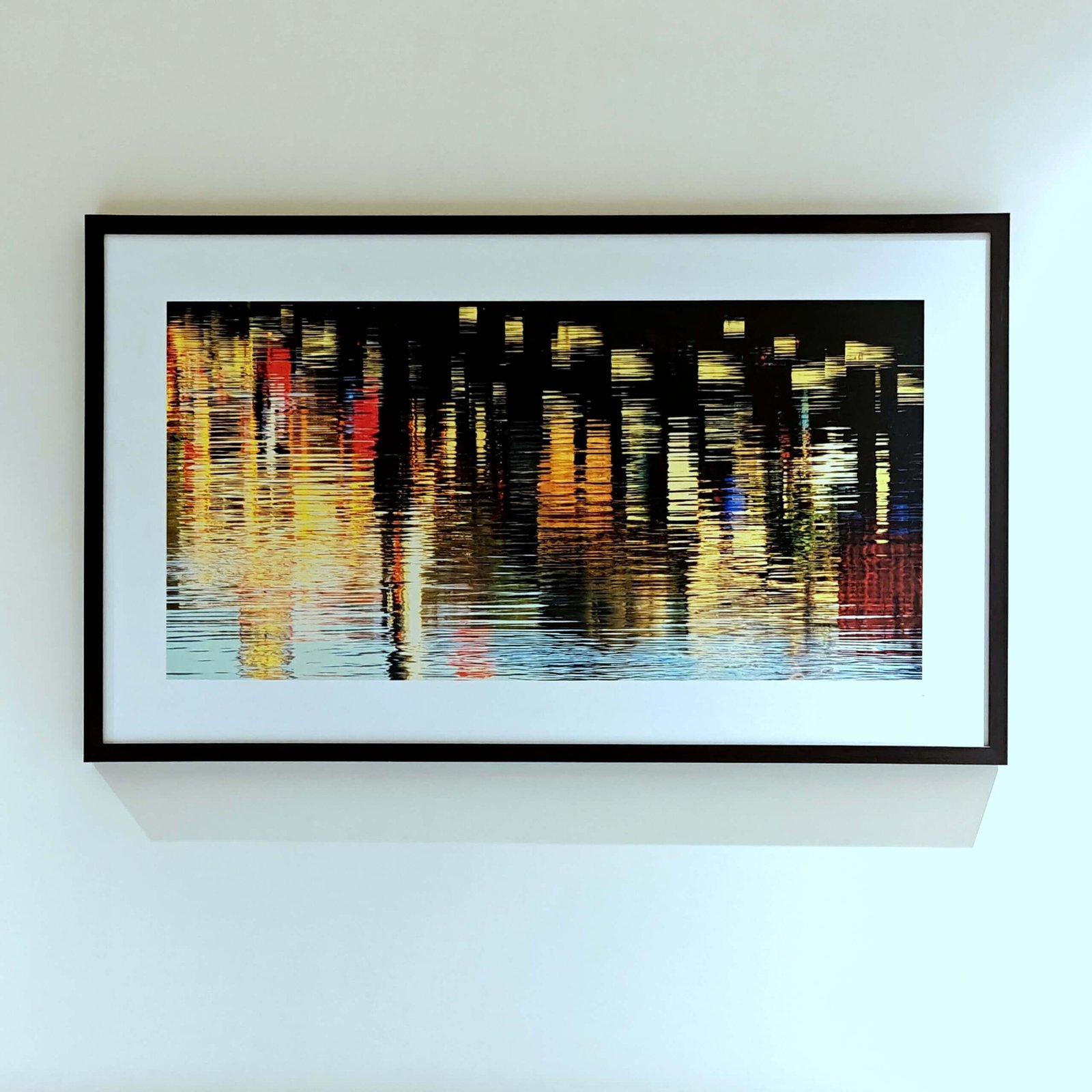
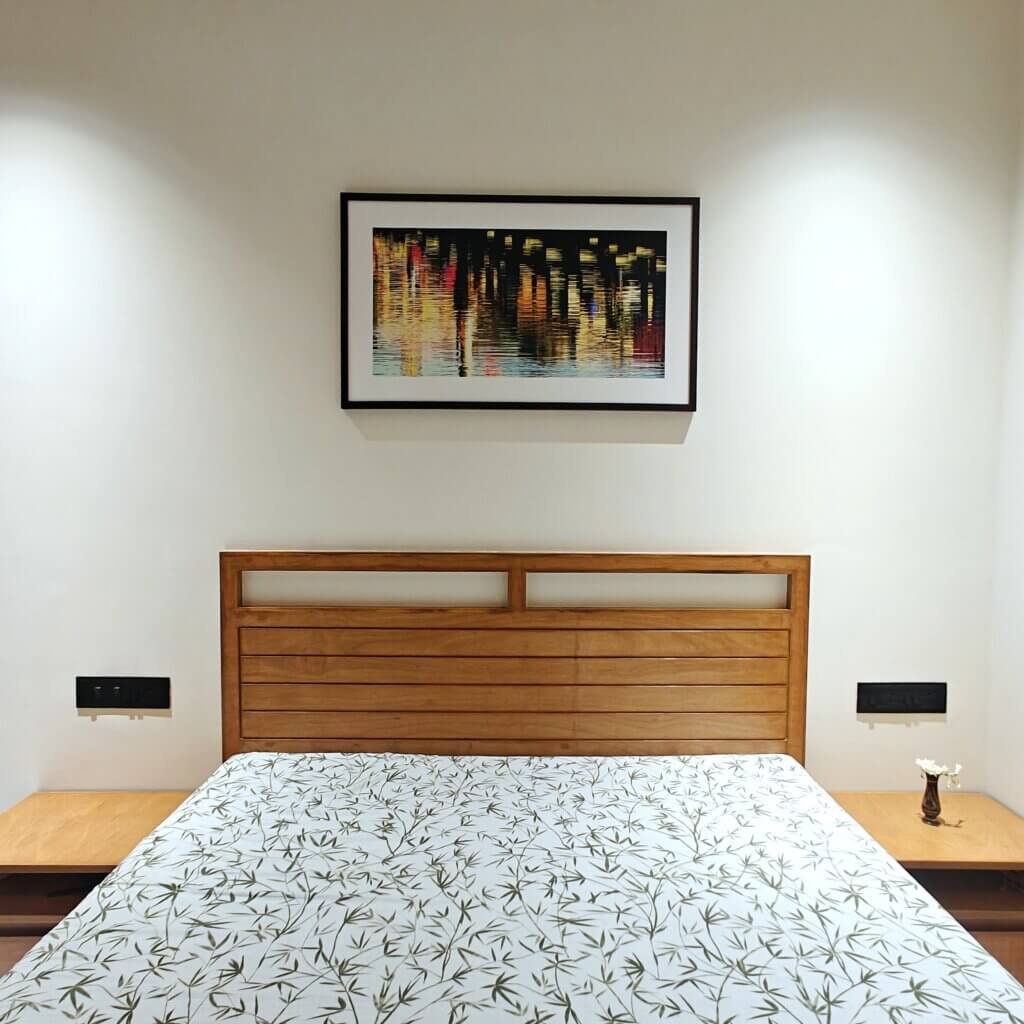
The owner’s bedroom takes a distinctly different visual direction. Here, an abstract composition captures the colourful reflections of Nashik’s surrounding architecture in the sacred Godavari River. The familiar elements of the city dissolve into colour, reflection and abstraction, transforming architecture into an almost painterly image.
The bedroom itself follows a subtle and restrained colour palette. Against this quiet backdrop, the deliberately contrasting artwork becomes a focal point. Its abstraction introduces energy without disturbing the calmness of the room, while its subject brings together several of the owner’s interests—architecture, history, art and culture.
Across the two spaces, the artworks create different relationships with the home. In the living room, heritage architecture is presented through its tangible details and play of light; in the bedroom, the same cultural landscape is transformed through reflection and abstraction. Together, they create a visual dialogue between what is remembered and what is reimagined.
The result is a home where art is not an afterthought, but part of the larger design language—a place where Nashik’s architectural and cultural memory finds a contemporary expression within everyday living.